
AI for Good
Cameras against
labour exploitation.
AI for worker-welfare monitoring in authorised labour investigations: a dated record of one agreed work-area view, for your team to review.
What one view can show
over time.
Four questions one fixed view can inform between visits. The footage points to the next check, never the answer alone.
Long days, flagged for review.
Clips show activity at the tables early and late on two days. A pilot would test flagging such days; footage shows when work was visible, not who or for how long.
- Activity visible to
- Activity visible to
- Activity visible to
- Activity visible to
- Activity visible to
- Activity visible to
- Activity visible to
- Activity visible to
Proposed review flag · and
- Activity visible to
- Activity visible to
- No footage received to
- Activity visible to
- Activity visible to
- Activity visible to
- Activity visible to
Proposed review flag · and
- Activity visible to
- Activity visible to
- Activity visible to
- Activity visible to
- Activity visible to
- Activity visible in a reviewed clip
- No footage received
- Proposed review flag
- Empty: nothing reviewed, nothing known
Clips show activity at those times, not between them.

Next: compare with rosters, time records and workers’ accounts.
Work during warned weather.
A clip is read beside a named external weather record: alert, station, distance and time. It shows what was going on and when; exposure is for the inspection to establish.

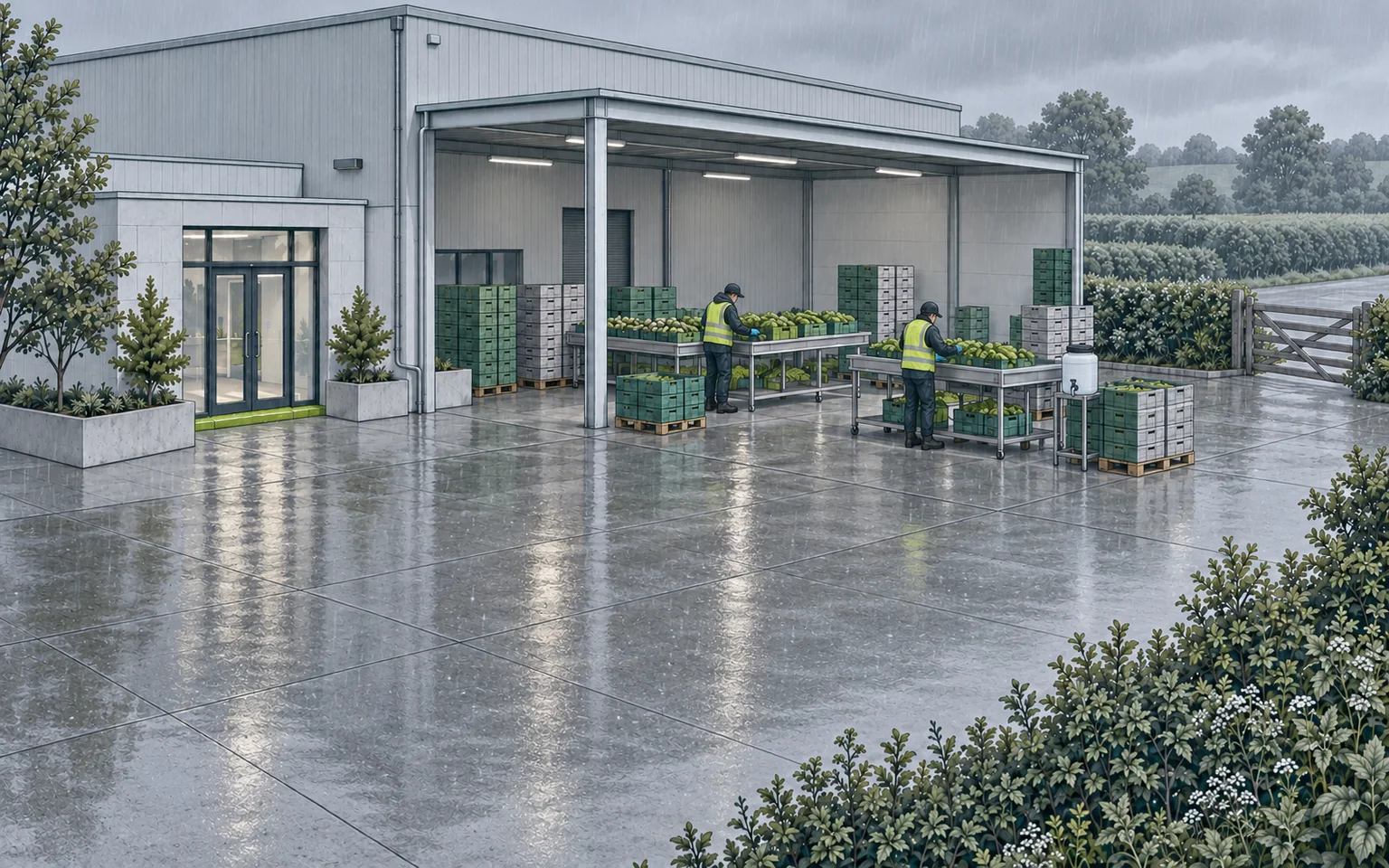
Hypothetical clip, Tuesday 14 July, 13:05. Sorting under the open-sided roof.
Alert in force to . Station 11 km away: 30 °C at (12:00 UTC), not a measurement at the tables.
Review next: heat risk assessment, rest and water arrangements, shade.
Shelter and welfare, in frame.
Cover, a water point or a welfare unit in view is a fact to check on the visit. Outside the frame stays unknown; no unit films toilets, changing rooms or rest interiors.
Review visible protection.
For a task whose required protection is set separately, a reviewer records what the view resolves. Unclear is not absent and presence is not fit. A pilot would test tagging clips.
- Hi-vis vest
- Visible
- Gloves
- Visible
- Eye protection
- Unclear at this distance
One unit.
Nothing from the premises.
A self-contained camera and AI unit with its own power and connectivity. Footage goes to your agency or an agreed receiving environment, drawing nothing from the premises.
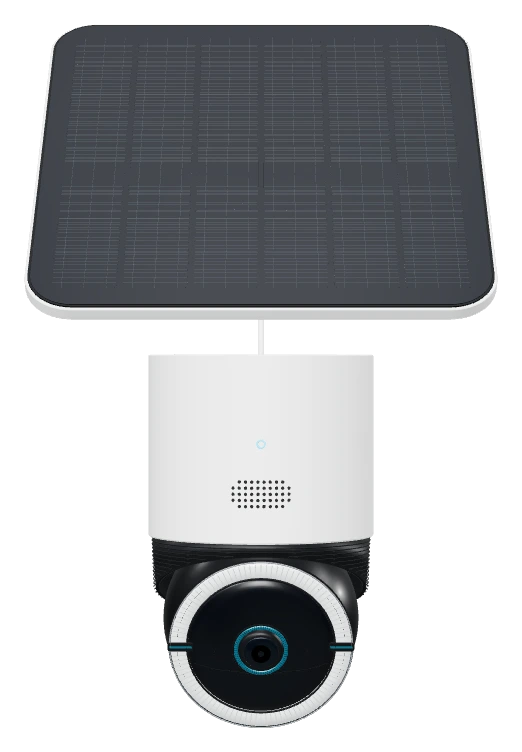
- Own power and connection.No site mains, Wi-Fi or recorder.
- Records forward from installation.It cannot show earlier events; behaviour through a power or signal loss is demonstrated in the pilot.
- Candidates, not conclusions.AI search finds clips for human review; receipt and keeping of footage are agreed with your evidence team.
Settle the practical
questions first.
This proposed pilot excludes facial recognition, biometrics, person tracking, worker audio and risk or productivity scores, and never films accommodation, toilets, changing areas or rest spaces. Authority, siting and safeguarding stay with your agency; urgent protection never waits.
Does it record continuously?
Not assumed. What the unit records in the intended conditions, including whether it can hold a continuous window on its own power, is demonstrated against observed events before the pilot relies on it. Where recording is not continuous the record says so, and absence of footage is never treated as absence of an event.
What happens when power or the connection drops?
What is recorded and retained during a loss, how long the unit runs on its own power in the intended conditions, and how a gap is told apart from footage not yet received are demonstrated for the specific deployment rather than assumed.
Who places, services and removes it, and where?
Installation, checks, servicing and removal follow responsibilities agreed with your agency: who may attend the site, when, and what is recorded about each visit. Lawful authority, siting and access permissions are your agency’s decisions. A placement that would expose the enquiry or raise the risk to the people filmed may be the wrong tool, and we offer no advice on surveillance tactics.
What does our evidence team receive?
Footage in the receiving environment agreed with your agency. How recording times are checked, how source material and working copies are kept, who can access them and how material is exported are agreed with your evidence team and demonstrated with a specimen. A link into your evidence system is not assumed.
How are weather records and review flags handled?
As proposed pilot workflows, not shipping detectors. Weather is a separate record retrieved from an identified source and kept with its provider, station or region, distance from the view, time with its zone, retrieval time and version. Any automatic flagging of activity or visible protection would be judged against human-labelled footage, with unassessable as a valid answer.
What does it not do?
No tracking of individuals, facial recognition, biometrics or scores. No reading of hours, breaks, fatigue or pay from footage. No heat-stress diagnosis, and no exposure or breach read from weather context. No compliance rate for protective equipment. Unsafe conditions may warrant health-and-safety action; they do not by themselves establish forced labour or trafficking.
Reading behind the approach
Guidance that shaped the approach. None of these bodies has reviewed or endorsed this product.
Put one question
to the test.
Tell us the kind of question, the work area and the receiving arrangements. We’ll scope a focused pilot, and say plainly if a new unit is not the right tool.
Discuss a focused pilot